
In a wood-based panel production line, particle screening is an important step for controlling the material entering downstream processes.
For Particle Board and related applications, the screening system needs to separate particles according to defined size ranges while maintaining continuous material flow.
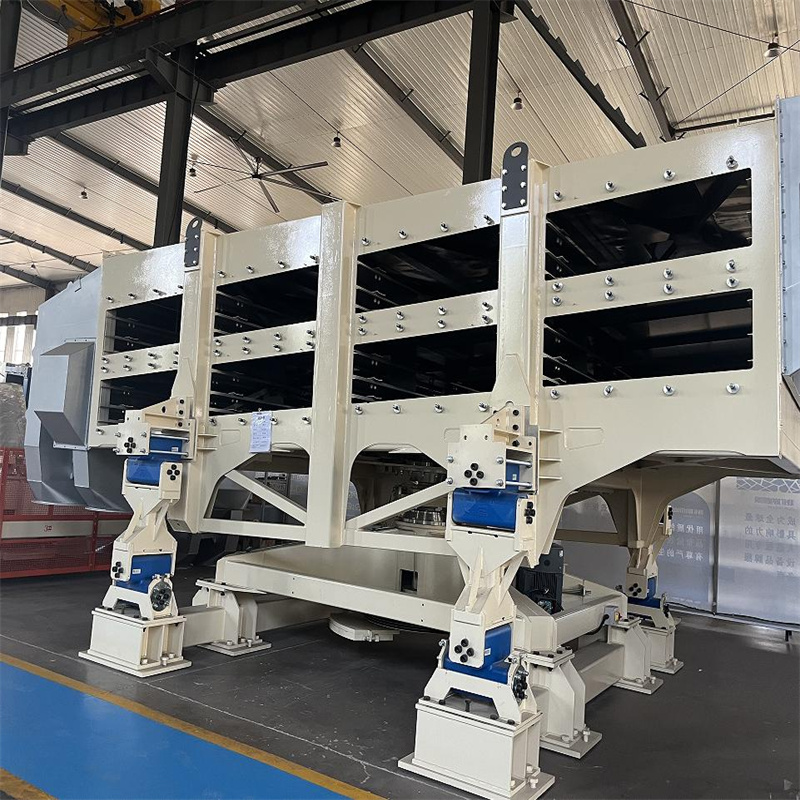
The Particle Super Screen is designed for this type of screening duty.
Inside the equipment, the Stainless Steel Screen Frame and Stainless Steel Mesh Screen Sieve form the actual screening surface.
Although these components are smaller than the complete screening machine, they directly participate in particle separation.
The quality of the screen mesh, the rigidity of the frame and the accuracy of the openings can all influence the final screening result.
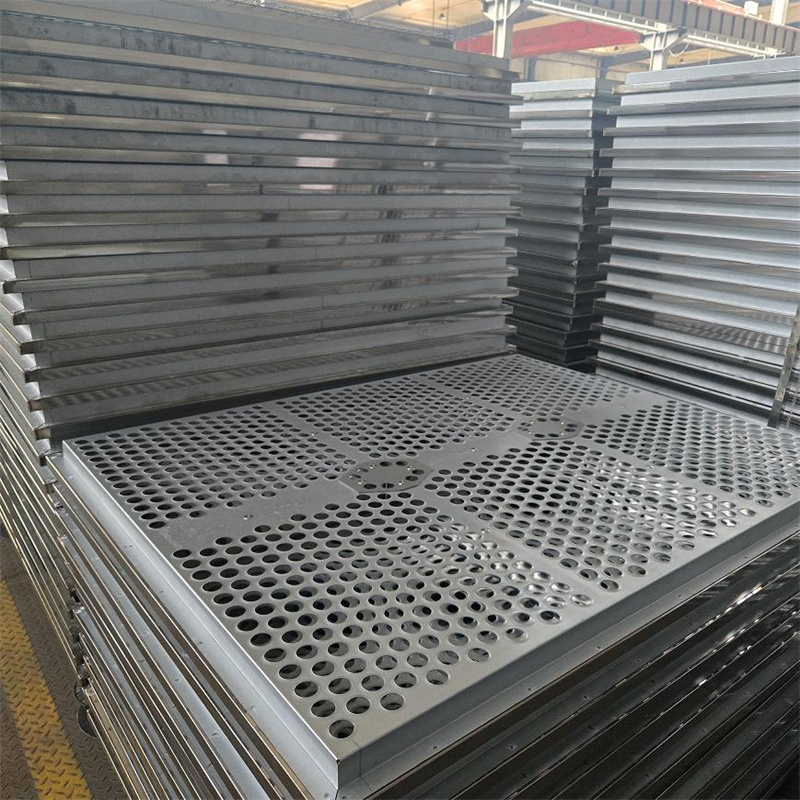
The Stainless Steel Screen Frame is the supporting structure that holds the screening mesh in the required position.
It provides mechanical support for the mesh while allowing the screen surface to maintain its designed geometry during operation.
A suitable screen frame should provide:
The frame is therefore more than a simple border around the mesh.
It helps maintain the working condition of the entire screening surface.
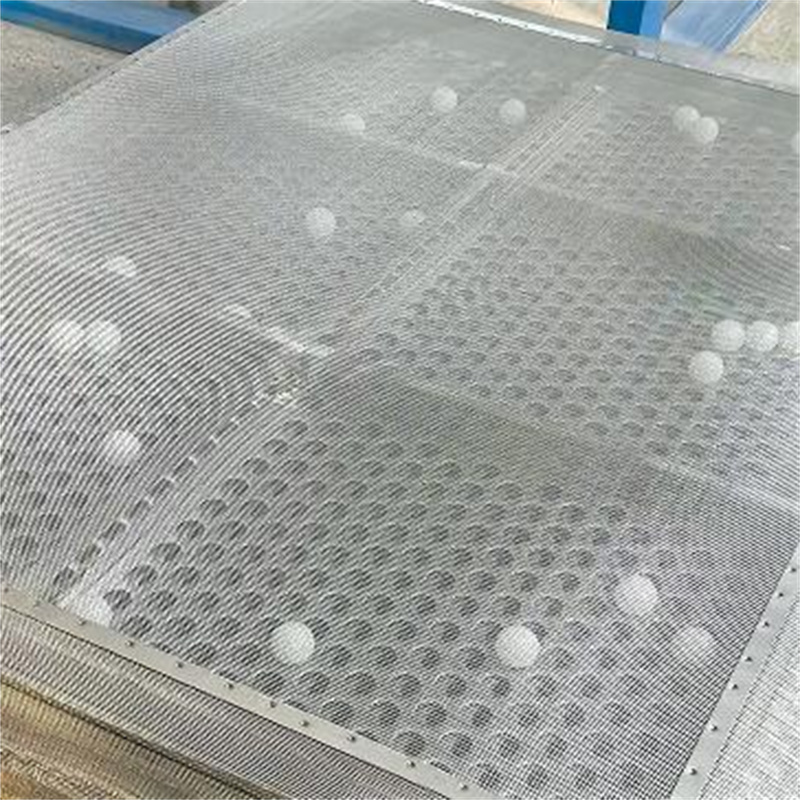
The Stainless Steel Mesh Screen Sieve is the working screening surface through which particles are classified.
Its openings determine which particles can pass through the screen while larger particles remain on the screening surface and continue toward the appropriate discharge route.
Depending on the application, different mesh specifications can be selected according to:
Mesh opening
Wire diameter
Open area
Mesh type
Screen dimensions
Material grade
The correct combination is important because screening performance is determined by the relationship between the mesh and the material being processed.
Particle screening is a demanding mechanical process.
The screen surface can be exposed to continuous contact with:
Stainless steel provides useful characteristics for this environment.
Stainless steel can provide better resistance to moisture and corrosion than many ordinary steel alternatives.
The mesh needs to maintain its structure under continuous screening conditions.
A suitable stainless steel mesh can provide stable performance during repeated particle contact.
Maintaining the designed opening geometry is important for consistent classification.
For this reason, stainless steel mesh is commonly considered for demanding screening applications where durability and stable openings are important.
One of the most important specifications of a screen is its opening size.
The opening controls the approximate particle fraction that can pass through the screening surface.
For example:
Smaller opening → finer separation
Larger opening → coarser separation
However, actual screening performance depends on more than the nominal opening.
Other factors include:
Therefore, selecting a screen only according to a desired particle size may not always produce the expected result.
The complete screening application needs to be considered.
A screen is essentially a precision classification surface.
If the openings vary significantly, the screening result may become less consistent.
A high-quality mesh should maintain relatively uniform openings across the working area.
This helps the screening machine achieve a more predictable separation effect.
For Particle Super Screen applications, mesh quality can influence:
Particle classification
Material throughput
Screen loading
Fine-particle recovery
Oversize separation
Screen service life
Therefore, mesh manufacturing accuracy is an important consideration when selecting replacement screen sieves.
Even a high-quality mesh can perform poorly if the supporting frame is not sufficiently stable.
During operation, the screen may experience vibration, material impact and repeated mechanical loading.
If the frame deforms, the mesh tension and opening geometry can change.
Potential consequences include:
A properly designed stainless steel screen frame helps maintain the intended geometry of the screening surface.
It is useful to evaluate the Stainless Steel Screen Frame + Mesh Sieve as a complete assembly rather than two independent parts.
The frame provides:
Support + Rigidity + Mounting
The mesh provides:
Opening + Separation + Material Classification
Together they create the effective screening surface.
A mismatch between frame dimensions and mesh specifications can reduce the effectiveness of an otherwise high-quality screen.
This is particularly important when replacing screens in existing Particle Super Screen equipment.
Even stainless steel screening mesh is subject to wear.
Common issues can include:
Continuous particle movement gradually wears the wire surface.
Repeated impact or excessive mechanical stress can damage individual wires.
Wear can increase the effective opening size and change particle separation.
Improper tension or mechanical impact may cause local distortion.
Repeated loading can eventually affect the supporting structure.
These conditions should be inspected regularly, particularly in high-capacity production environments.
Screen wear does not always result in immediate equipment failure.
In many cases, the first sign is a gradual change in screening performance.
For example:
More oversize material in the fine fraction
More fine particles remaining with larger material
Changes in downstream particle distribution
Reduced screening efficiency
Increasing material accumulation
This is why regular inspection is preferable to waiting until the mesh breaks completely.
The objective is to identify changes in screening behavior before they develop into a larger production problem.
Particle Super Screen systems can be used in particle preparation and screening applications where controlled separation of wood particles is required.
Typical applications can include:
The exact screen configuration depends on the material and production process.
For this reason, screen mesh selection should be based on the actual production requirement rather than using one standard mesh specification for every machine.
Before ordering a replacement screen, several technical parameters should be confirmed.
Identify the Particle Super Screen model or equipment configuration.
Confirm the overall length, width and thickness.
Specify the required opening size.
Wire diameter affects strength, open area and service performance.
Confirm the required stainless steel grade.
Check frame material, fixing arrangement and structural dimensions.
The mounting system should match the existing machine.
Providing these details helps reduce the possibility of receiving an incorrectly sized screen.
For demanding industrial applications, the choice of frame material can influence service performance.
| Feature | Ordinary Steel Frame | Stainless Steel Screen Frame |
|---|---|---|
| Corrosion Resistance | Application dependent | Higher |
| Moisture Environment | Requires consideration | More suitable |
| Surface Durability | Depends on coating | Good |
| Maintenance | May require surface protection | Generally lower corrosion concern |
| Screening Application | General applications | Demanding screening environments |
Actual performance depends on material grade, construction and operating conditions.
A common mistake is ordering a screen based only on length and width.
However, two screens with identical external dimensions may have completely different screening characteristics.
They may differ in:
Therefore, a professional replacement screen should be matched according to the complete technical specification.
HUATAO supplies screening components for wood-based panel production lines, including:
Stainless Steel Screen Frame
Stainless Steel Mesh Screen Sieve
Particle Screen Mesh
Screen Frame
Replacement Screen Panels
and other screening-related spare parts.
These components can be supplied for Particle Board, MDF and other wood-based panel processing applications.
For customized replacement requirements, HUATAO can work from:
This allows the replacement screen to be manufactured according to the actual machine configuration.
The Particle Super Screen is a complete machine, but its screening performance ultimately depends on the condition of the working screen surface.
The Stainless Steel Screen Frame maintains the structural foundation.
The Stainless Steel Mesh Screen Sieve provides the actual classification openings.
When both are correctly designed and maintained, the screening system can maintain more consistent material separation.
For this reason, screen replacement should not be treated as a simple consumable purchase.
The correct screen should match the machine, material, particle-size requirement and operating environment.
HUATAO provides Stainless Steel Screen Frames and Stainless Steel Mesh Screen Sieves for Particle Super Screen and related wood-based panel screening applications.
Our screening components are available for customized requirements according to machine dimensions, mesh opening, material specifications and installation structure.
For customers replacing worn Particle Super Screen panels, providing an original sample, drawing or detailed dimensions can help us identify the correct screen configuration.
HUATAO Wood-Based Panel Machinery Co., Ltd.
Email: bella@huataogroup.com
WhatsApp: +86 17731169773
Website: www.woodpanelmachinery.com
For Particle Super Screen, Stainless Steel Screen Frame, Stainless Steel Mesh Screen Sieve and customized screening spare parts, please send us your machine model, original screen photos, dimensions or technical drawings for evaluation.
#ParticleSuperScreen #StainlessSteelScreen #StainlessSteelScreenFrame #StainlessSteelMesh #MeshScreenSieve #ScreenMesh #ScreenFrame #ParticleScreen #ParticleBoardScreen #SuperScreenSpareParts #ParticleBoardMachinery #MDFMachinery #WoodChipScreening #ParticleScreening #ScreeningSieve #ScreeningMesh #WoodBasedPanelMachinery #ParticleBoardProduction #MDFProduction #HUATAO
can not be empty
can not be empty

HUATAO Wood-based Panel Machinery Co., Ltd
ADD : No.298 Zhonghua North Street, Shijiazhuang 050000 China.
TEL : +86 0311 80690567
EMAIL :bella@huataogroup.com
Web: www.woodpanelmachinery.com
 WhatsApp & WeChat : +86 17731169773