
In Particle Board and other wood-based panel production lines, glue blending is one of the most important stages between material preparation and mat forming.
The objective is not simply to add resin to the wood particles.
The adhesive needs to be distributed over the particle surfaces as consistently as possible before the material reaches the forming section.
Inside a Ring Glue Blender, a series of mechanical components work together to move, tumble and mix the particles while adhesive is introduced into the process.
Among these components, the Glue-Blending Claw, also called a Mixing Claw or Glue Mixer Claw, is a relatively small but highly active wear part.
Its working condition can influence how particles move through the mixer and how effectively the material is mixed after glue application.
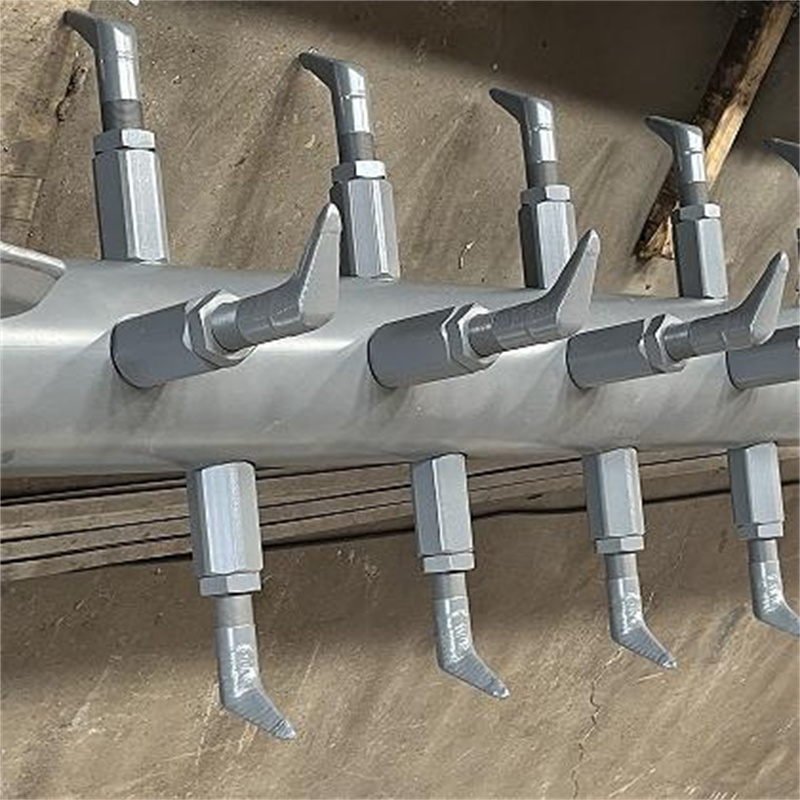
A Glue-Blending Claw is a replaceable working component installed on the rotating assembly of a Ring Glue Blender.
Its main function is to interact mechanically with the wood particles as they move through the mixer.
Depending on the equipment design and claw arrangement, the component can help:
A Ring Glue Blender is commonly divided into functional areas such as feeding, glue application, mixing and discharge. The rotating mixing components drive the particles through these stages.
Therefore, the Glue-Blending Claw is not simply a metal attachment.
It is part of the material-flow and mixing mechanism of the blender.
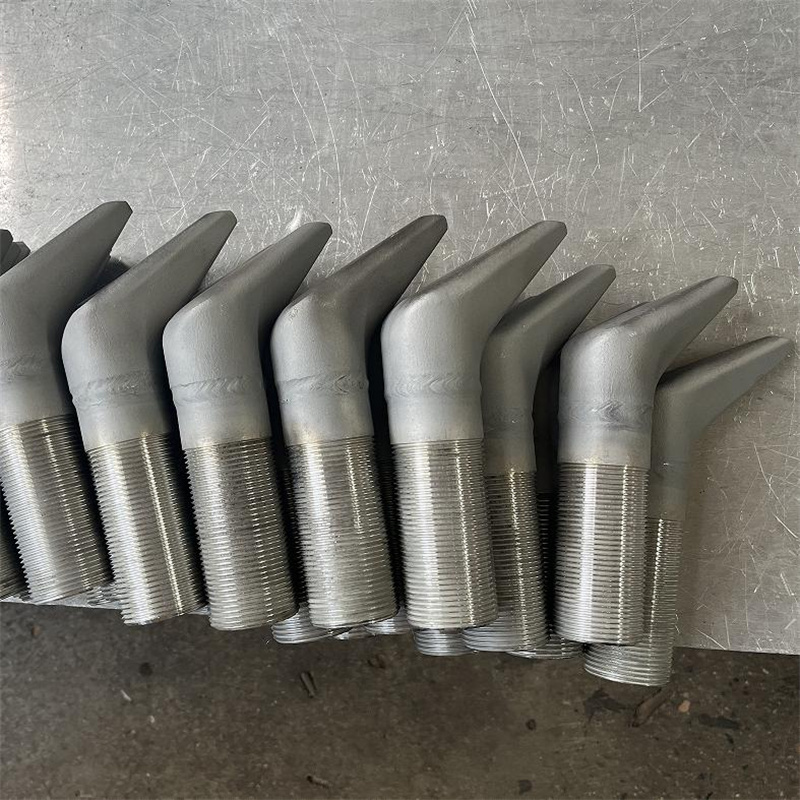
The claw operates in direct and repeated contact with wood particles.
During continuous production, it is exposed to:
This environment naturally creates wear.
As the working profile changes, the claw may no longer interact with the material in the same way as a new component.
This is why the Glue-Blending Claw is normally treated as a wear-sensitive spare part rather than a component expected to last indefinitely.
The word “mixing” can make the component sound simpler than it actually is.
Inside a ring-type glue blender, the wood particles need to continue moving through the chamber while being repeatedly redistributed.
The claw contributes to this movement.
A simplified process can be described as:
Particle Feeding → Particle Movement → Glue Application → Tumbling and Mixing → Discharge
During these stages, the claw helps create mechanical movement within the particle stream.
That movement is important because resin needs opportunities to contact and spread across the particle surfaces.
Industrial descriptions of ring glue blenders similarly emphasize high-speed particle movement and mixing to achieve more uniform glue distribution.
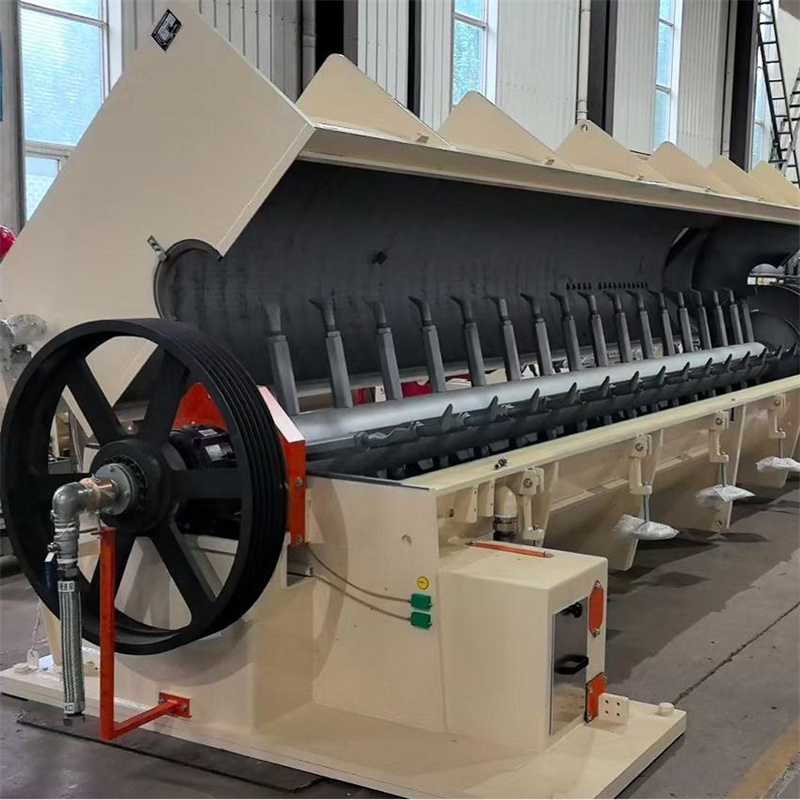
A Glue-Blending Claw is not effective simply because it is attached to the shaft.
Its:
can influence how it interacts with the material.
Even relatively small changes can alter:
For replacement projects, reproducing the correct geometry is therefore important.
A claw that physically fits the machine is not necessarily a technically equivalent replacement.
One important characteristic of a worn Glue-Blending Claw is that deterioration may be gradual.
The machine may continue running even while the claw is losing material from its working edges.
As wear progresses:
Original Profile → Gradual Wear → Changed Material Interaction → Reduced Mixing Condition
The actual effects depend on the machine and production conditions, but excessive wear can alter the way the particles are moved through the blending chamber.
This is why inspecting the claw's shape and dimensions can be more useful than simply checking whether it is still physically intact.
The glue-blending environment is abrasive, so material selection is an important part of claw design.
A suitable wear-resistant construction can help maintain the working profile for a longer operating period.
Potential benefits include:
HUATAO-related product listings include wear-resistant and tungsten-carbide versions of mixing claws for glue-blending applications, showing that wear-resistant material options are available for demanding operating conditions.
The appropriate material should be selected according to the actual particle characteristics, production capacity and operating conditions.
Glue application is only one part of the blending process.
Even when the spray system is operating correctly, the resin still needs to contact an appropriate proportion of the particle surfaces.
Mechanical movement inside the blender helps expose different particle surfaces to the adhesive.
This creates an important relationship:
Particle Movement → Surface Exposure → Resin Contact → Mixing → More Consistent Blending
The Glue-Blending Claw contributes to the first part of this chain.
That is why a worn or incorrectly designed claw can be more significant than its small physical size might suggest.
The effects vary by machine, material and wear pattern, but some warning signs may include:
Particles may move differently through the blender.
Material movement through the mixing chamber may become less consistent.
Some claws may deteriorate faster because of their position or local material loading.
Abnormal interaction can create additional mechanical stress.
If the working profile changes substantially, the original mixing action may no longer be maintained.
These symptoms should be investigated together with the rotor, bearings, spray system and material conditions.
A ring glue blender can be understood as several functional areas.
Particles enter the machine and begin moving through the chamber.
Adhesive is introduced to the particle stream.
Particles are repeatedly moved and redistributed to improve adhesive coverage.
The blended material exits toward the next process.
The same type of claw may work under different conditions depending on its position.
This makes correct installation and positioning important.
Mixing claws are mounted in specific positions on the rotating assembly.
The orientation and spacing determine how material interacts with the rotating system.
During replacement, operators should verify:
Incorrect installation can change the designed material-flow behavior even if the replacement claw itself is manufactured accurately.
A Ring Glue Blender typically operates at significant rotational speed.
The rotating assembly needs to remain mechanically balanced.
Replacing one claw or a group of claws with components that differ significantly in weight or geometry may affect the balance of the rotor.
This is why replacement work should consider not only the individual claw, but also the condition of the complete rotating assembly.
Important checks can include:
The appropriate material depends on the application.
Possible considerations include:
Suitable for applications where abrasion conditions are controlled.
Can provide improved resistance under more demanding conditions.
May be considered for applications where a higher level of abrasion resistance is required.
The final selection should be based on:
Particle Abrasiveness + Production Capacity + Operating Hours + Required Service Life
It is not always necessary to use the hardest possible material.
The best solution is the one that provides an appropriate balance between performance, cost and operating conditions.
Stable mixing can also support better control of adhesive application.
When particle movement is consistent, the spray system and mechanical mixing process have a more predictable material stream to work with.
This can contribute to more stable resin distribution.
However, actual resin consumption also depends on:
Therefore, the Glue-Blending Claw should be considered one part of the overall glue-blending system rather than the sole factor determining resin consumption.
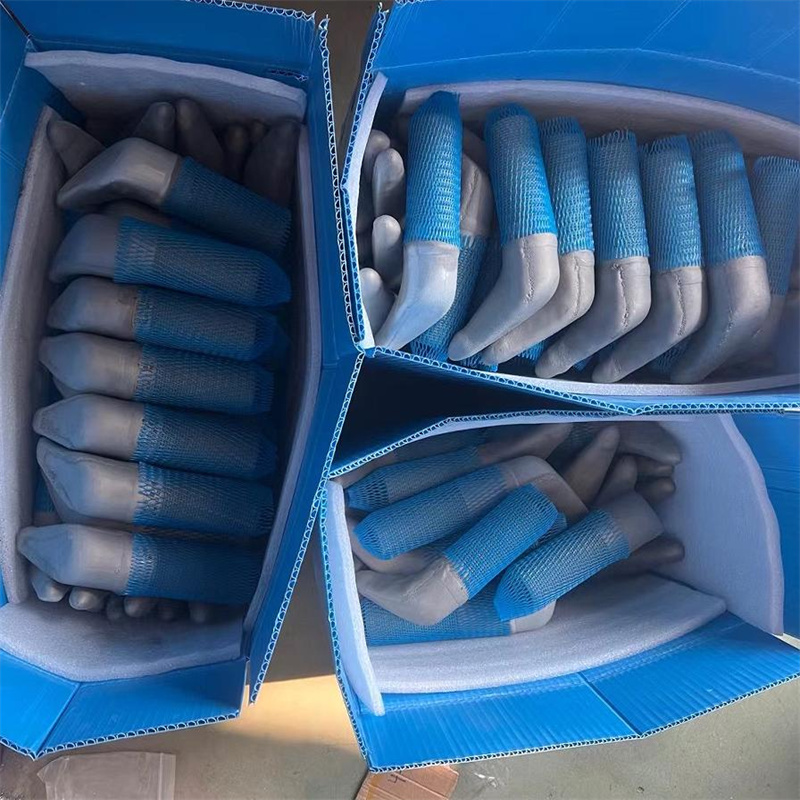
The working edge becomes noticeably thinner.
One side or part of the claw wears faster than the others.
Can be caused by impact, material selection, fatigue or abnormal operating conditions.
Improper tightening can create movement and secondary damage.
Wrong orientation or position can affect the material-flow pattern.
Resin or material deposits can change the effective working profile.
Routine inspection can help identify these conditions early.
A preventive inspection schedule should include:
Claw Wear
Check the working edges and overall profile.
Mounting
Verify bolts, locking systems and connection points.
Rotor Condition
Check shaft and rotating components.
Balance
Monitor abnormal vibration or noise.
Bearings
Inspect temperature, lubrication and operating condition.
Material Deposits
Remove excessive buildup where appropriate.
Spray System
Check whether abnormal adhesive application is contributing to deposits.
Maintenance should evaluate the claw together with the entire glue-blending assembly.
Before ordering replacement claws, it is recommended to confirm:
Different equipment designs may use different claw structures.
Length, width, thickness and mounting dimensions.
Wear-resistant steel, hardened material or other specified construction.
The exact shape should match the original design.
Hole position, bolt dimensions and installation angle should be confirmed.
Production capacity, material type and operating hours should be considered.
An original claw sample or technical drawing can significantly improve replacement accuracy.
Ring Glue Blenders used in different Particle Board production lines may have different claw structures and mounting systems.
For this reason, customized manufacturing can be useful for replacement projects.
HUATAO can provide Glue-Blending Claws according to:
This approach helps ensure that the replacement component matches the original mechanical system.
HUATAO supplies Glue-Blending Claws / Mixing Claws for Ring Glue Blenders used in wood-based panel production.
Our related Ring Glue Blender spare parts include:
HUATAO's Ring Glue Blender product information identifies Mixing Claw, Spray Gun and Discharge Shovel as associated spare parts for particle board glue-mixing applications.
These components can be supplied for applications involving:
A Glue-Blending Claw is much smaller than the complete Ring Glue Blender.
Its replacement cost may also be a small part of the total production-line investment.
However, it operates directly inside one of the key processes that determines how adhesive interacts with wood particles.
That makes its working condition worth monitoring.
A practical maintenance strategy is not simply:
“Replace the claw when it breaks.”
A better approach is:
Monitor wear → Evaluate working profile → Plan replacement → Maintain consistent mixing conditions
This can help reduce unexpected interruptions and avoid secondary damage to the rotating assembly.
The role of the Glue-Blending Claw can be summarized within the larger process:
Particle Feeding
↓
Glue Application
↓
Mechanical Mixing
↓
Particle Surface Coverage
↓
Discharge
↓
Mat Forming
The claw contributes directly to the mechanical mixing stage.
Its geometry, wear condition and material characteristics therefore need to be considered as part of the complete Ring Glue Blender system.
The Glue-Blending Claw, also called a Mixing Claw or Glue Mixer Claw, is a key wear component in Ring Glue Blenders used for wood-based panel production.
Its importance comes from its direct interaction with the particle stream during continuous mixing.
A properly selected and maintained claw can support:
Stable Particle Movement
Reliable Mixing Action
Consistent Resin Distribution
Controlled Wear
Longer Service Intervals
Reduced Maintenance Interruptions
The most important selection factors include:
Correct Geometry
Suitable Wear-Resistant Material
Accurate Mounting Dimensions
Proper Installation
Rotor Compatibility
Actual Production Conditions
For Particle Board, OSB, FOSB, MDF and other wood-based panel production lines, the Glue-Blending Claw should be treated as a critical wear part rather than an ordinary small accessory.
HUATAO Wood-Based Panel Machinery
Email: bella@huataogroup.com
Tel: +86 17731169773
Website: www.woodpanelmachinery.com
HUATAO provides Glue-Blending Claws, Mixing Claws, Ring Glue Blender spare parts, Spray Guns, Discharge Shovels and other machinery components for Particle Board, MDF, HDF, OSB and FOSB production lines.
#GlueBlendingClaw #GlueBlendingClaws #MixingClaw #GlueMixerClaw #RingGlueBlender #RingGlueBlenderSpareParts #GlueBlenderSpareParts #ParticleBoardGlueBlender #ParticleBoardMachinery #ParticleBoardSpareParts #WearResistantMixingClaw #TungstenCarbideMixingClaw #GlueMixing #ResinMixing #ParticleBoardProduction #OSBProduction #FOSBProduction #WoodBasedPanel #WoodBasedPanelMachinery #HUATAO
can not be empty
can not be empty

HUATAO Wood-based Panel Machinery Co., Ltd
ADD : No.298 Zhonghua North Street, Shijiazhuang 050000 China.
TEL : +86 0311 80690567
EMAIL :bella@huataogroup.com
Web: www.woodpanelmachinery.com
 WhatsApp & WeChat : +86 17731169773