
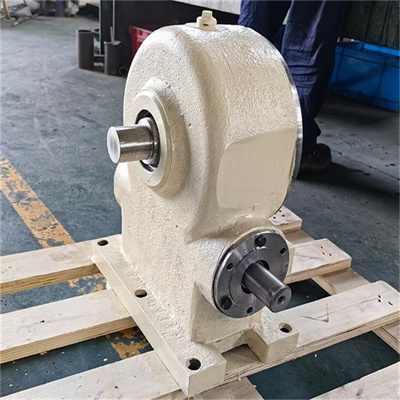
In the sanding section of a wood-based panel production line, every rotating component must operate with precise speed and stable torque to ensure consistent sanding quality. From conveyor systems to sanding rollers, reliable power transmission is essential for maintaining continuous production.
The Reducer, also known as a Gear Reducer or Gearbox, is one of the core components in the sanding machine drive system. It reduces motor speed while increasing output torque, allowing the machine to operate smoothly under heavy loads and demanding production conditions.
In wide belt sanding machines, reducers are commonly installed in different drive systems according to the equipment configuration, including:
Feed Conveyor Drive: Controls the conveying speed of panels entering and passing through the sanding machine.
Sanding Roller Drive: Provides the required rotational speed and torque for sanding roller assemblies, depending on the machine design.
Brush Roller Drive: Drives cleaning or brushing rollers used to remove residual dust from panel surfaces.
Auxiliary Transmission Systems: Provides power transmission for other rotating mechanisms that require specific speed and torque.
Different applications may require different reduction ratios, output torque, mounting arrangements, and gearbox configurations. Therefore, the correct reducer should be selected according to its actual installation position and operating conditions.
For MDF, HDF, Particle Board (PB), OSB, plywood, and decorative panel production lines, a properly selected reducer helps improve equipment reliability, maintain stable production, and extend the service life of the transmission system.
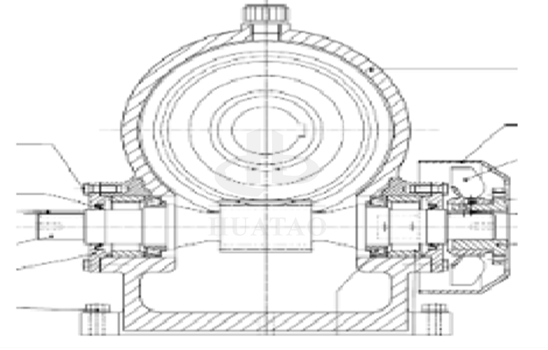
A reducer transfers mechanical power from the motor to the driven equipment while adjusting the rotational speed and output torque.
Its main functions include:
Electric motors generally operate at speeds higher than those required by many sanding machine mechanisms. A reducer lowers the motor speed to the appropriate operating range for the driven component.
When rotational speed is reduced, the reducer provides higher output torque according to the transmission ratio and efficiency. This enables the driven equipment to operate under its required load conditions.
Different components in a sanding machine require different operating speeds. Reducers help match the motor's output characteristics with the speed and torque requirements of the feed conveyor, sanding roller, brush roller, and other drive mechanisms.
A suitable reducer helps transmit power consistently under the specified operating conditions, supporting stable equipment operation during continuous production.
Correct reducer selection helps avoid unsuitable operating speeds and excessive loading. A properly matched transmission system can also help minimize unnecessary mechanical losses and maintenance requirements.
HUATAO supplies reducer replacement solutions for industrial sanding machines and wood-based panel production equipment.
Because reducers used in different machine positions may have different transmission requirements, selecting a replacement based only on external dimensions or motor power is not sufficient.
Our technical team can evaluate replacement requirements according to the original gearbox specifications, machine configuration, and operating conditions.
Key selection parameters include:
Motor Power (kW): Rated power of the driving motor.
Input Speed (RPM): Rotational speed at the reducer input shaft.
Output Speed (RPM): Required rotational speed of the driven equipment.
Gear Ratio: The reduction ratio required for the application.
Output Torque (Nm): Torque required by the driven mechanism.
Mounting Position: Foot-mounted, flange-mounted, or other installation arrangements.
Shaft Configuration: Input and output shaft dimensions and connection types.
Operating Conditions: Load characteristics, starting frequency, operating hours, and working environment.
The reducer should also be checked for service factor, starting torque, shock loads, and thermal operating conditions to ensure suitable performance.
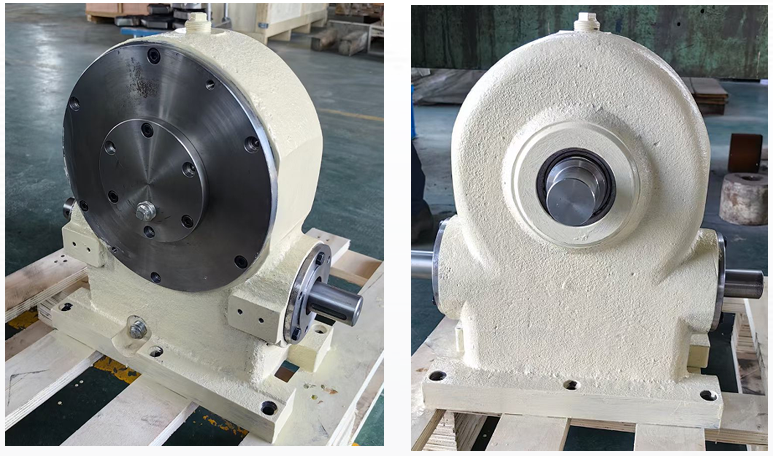
To identify a suitable replacement reducer, please provide the following information whenever available:
| Required Information | Details |
| Machine Manufacturer | Original sanding machine brand |
| Motor Power | Rated motor power in kW |
| Input Speed | Motor speed in RPM |
| Required Output Speed | Driven component speed in RPM |
| Gear Ratio | Existing reducer ratio |
| Mounting Type | Foot-mounted, flange-mounted, etc. |
| Shaft Details | Input and output shaft dimensions |
| Existing Reducer | Model number, nameplate, or photos |
If the original reducer model is still available, a clear photo of its nameplate is especially helpful for initial identification.
Looking for a replacement reducer for your wide belt sanding machine?
HUATAO can evaluate your requirements based on the original reducer model, nameplate, technical drawings, or existing product samples.
Whether you need a replacement for a conveyor drive, sanding roller drive, brush roller drive, or another transmission system, our team can help assess the specifications and identify a suitable solution.
Even if you do not have complete technical drawings, you can start by sending us:
Contact HUATAO to discuss your reducer requirements and obtain a suitable replacement solution for your sanding equipment.
Contact HUATAO for a Quotation
In addition to reducers, HUATAO supplies a range of mechanical, transmission, and sanding components for wide belt sanding machines used in MDF, HDF, particleboard, OSB, plywood, and other wood-based panel production lines.
Explore our related products:
Contact Rollers – Work with abrasive belts to provide controlled sanding pressure and consistent material removal.
Polishing Rollers – Help achieve the required surface finish during fine sanding.
Sanding Belts – Main abrasive components for panel thickness calibration and surface finishing.
Slide Pads – Provide support in pressure sanding units.
Universal Joints – Transmit torque between connected shafts and accommodate angular misalignment.
Bearing Seats – Support bearings and rotating shafts in sanding machine assemblies.
Swinging Cylinders – Control pneumatic movements in specific sanding machine mechanisms.
Vibration Absorbing Rubber Couplings – Help absorb vibration in mechanical transmission systems.
Explore the complete range of Sanding Machine Spare Parts supplied by HUATAO.
can not be empty
The E-mail format is not correct
can not be empty


HUATAO Wood-based Panel Machinery Co., Ltd
ADD : No.298 Zhonghua North Street, Shijiazhuang 050000 China.
TEL : +86 0311 80690567
EMAIL :bella@huataogroup.com
Web: www.woodpanelmachinery.com
 WhatsApp & WeChat : +86 17731169773