
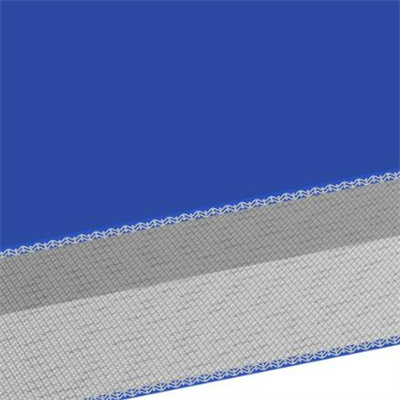
The Forming Belt is installed in the forming section of wood-based panel production lines. It serves as the conveying surface of the forming machine, receiving wood fibers, particles, flakes, or strands from the material distribution system and transporting the formed material mat toward the next processing stage.
During operation, the Forming Belt runs continuously through the forming machine, carrying the loose wood material while maintaining a stable conveying surface. Its dimensional stability, surface characteristics, tensile properties, and running performance influence material transportation and the consistency of the forming process.
In MDF, HDF, Particle Board (PB), and OSB production, the forming process is an important stage that determines the initial material distribution and mat structure. A properly selected Forming Belt helps maintain stable conveying conditions and supports consistent mat formation before pre-pressing or subsequent pressing operations.
HUATAO manufactures Forming Belts for different wood-based panel forming systems, including continuous press production lines and multi-opening press production lines. Different belt materials and structures are available according to equipment design and operating requirements.
1. Transporting Wood Material
The Forming Belt receives wood fibers, particles, flakes, or strands from the forming and material distribution system. It transports the material through the forming section toward the next processing stage.
2. Supporting Stable Mat Formation
The belt provides a continuous and stable conveying surface during the forming process. Stable belt operation helps maintain the intended material layer as it moves through the forming machine.
3. Maintaining Dimensional Stability
A Forming Belt needs to maintain its dimensions and running characteristics during continuous operation. Appropriate belt materials and reinforcement structures help control elongation and support stable tracking.
4. Supporting Consistent Material Distribution
The belt surface and running stability influence the transportation of the loose material mat. A suitable belt helps reduce disturbances caused by unstable conveying conditions and supports consistent material handling.
5. Providing Suitable Surface Characteristics
The belt surface needs to match the processed material and forming machine requirements. Appropriate surface properties help support reliable material transportation and can reduce unwanted material adhesion or slippage under suitable operating conditions.
6. Withstanding Continuous Wear
Forming Belts are exposed to continuous friction, material contact, and mechanical stress during production. Wear-resistant materials and suitable belt construction help maintain working performance and reduce the frequency of belt replacement.
HUATAO manufactures Forming Belts according to different forming machine designs, production requirements, and operating conditions. Belt materials, thicknesses, reinforcement structures, surface characteristics, and joint configurations can be customized for different applications.
1. Multiple Material Options
Different forming systems require different belt materials and structures. HUATAO provides several options, including:
TPU Forming Belts
PVC Forming Belts
Polyester Forming Belts
Material selection depends on the forming machine configuration, operating conditions, required mechanical properties, and production process.
2. High Tensile Strength and Dimensional Stability
The belt structure is designed to withstand the tension and mechanical stress generated during continuous operation. Suitable reinforcement and material selection help control elongation and maintain stable belt dimensions.
3. Wear Resistance
The Forming Belt operates in continuous contact with wood fibers, particles, flakes, and other materials. Wear-resistant surface materials and suitable belt construction help withstand friction and support reliable service performance.
4. Optimized Surface Characteristics
Different surface materials and structures are available to match the requirements of different forming systems. Suitable surface characteristics help maintain stable material transportation and support reliable operation.
5. Antistatic Options
Antistatic Forming Belts are available for applications requiring static electricity control. The appropriate antistatic structure can be selected according to equipment configuration and operating conditions.
6. Customized Thickness and Dimensions
HUATAO can manufacture Forming Belts according to the required belt width, circumference, thickness, and other dimensional specifications to match the original equipment.
7. Customized Joint Options
Different joint configurations can be selected according to the belt structure and machine requirements, including:
Endless belts
Z-Splice joint belts
Other suitable joint configurations, subject to belt design
8. OEM and Customized Production
HUATAO can manufacture replacement Forming Belts based on:
Existing belt samples
Belt width, length, and thickness
Surface material and reinforcement structure
Tensile strength and elongation requirements
Joint type and installation requirements
Equipment manufacturer, model, and operating conditions
Different forming machines require different belt structures. HUATAO provides customized solutions for both continuous press and multi-opening press production lines.
1. Forming Belt for Continuous Press Machines
These belts are designed for compatible continuous forming systems used in wood-based panel production. TPU, and PVC options are available according to the required surface properties and operating conditions.
Typical features include:
Suitable material options for continuous conveying
Wear-resistant belt surfaces
Stable running performance
Controlled belt elongation
Antistatic options
Customized dimensions and joint configurations
2. Polyester Forming Belt for Multi-Opening Press Machines
Polyester Forming Belts are used in compatible MDF and HDF multi-opening press production lines. Unlike solid-surface TPU or PU forming belts, these belts have a textile structure with air permeability characteristics.
Their structure and air permeability can influence the material forming and conveying process. Appropriate belt selection is important for maintaining stable operation and supporting consistent mat formation.
Typical features include:
Polyester fiber construction
Air permeability according to application requirements
Wear-resistant fabric structure
Stable running characteristics
Customized width, length, and thickness
Customized permeability and belt specifications
The two types of Forming Belts have different structures and applications. Please confirm the press type and installation position before selecting a replacement belt.
HUATAO Forming Belts are designed for compatible forming systems used in:
MDF production lines
HDF production lines
Particle Board (PB) production lines
OSB production lines
Other engineered wood panel production facilities
Different belt structures are available for continuous press and multi-opening press forming systems. The suitable belt type depends on the production line configuration, forming machine design, and operating requirements.
HUATAO provides customized replacement Forming Belts for compatible equipment, subject to technical confirmation.
Selecting the correct Forming Belt requires more than confirming its width and length. Belt material, thickness, reinforcement structure, surface characteristics, joint design, and operating conditions should also be considered.
To help us recommend a suitable replacement Forming Belt, please provide:
Forming machine manufacturer and model
Production line type: Continuous Press or Multi-Opening Press
Existing belt technical specifications
Belt width, circumference, and thickness
Belt material and surface structure, if available
Joint type: Endless, Z-Splice, or other configuration
Photos of the existing belt and installation position
Information about current belt wear, elongation, tracking, or material conveying issues
HUATAO can review your technical information and recommend a customized Forming Belt solution according to your equipment and production requirements.
Looking for replacement Forming Belts for your MDF, HDF, Particle Board, or OSB production line?
Whether you need a TPU Forming Belt for a continuous press system or a polyester Forming Belt for a multi-opening press machine, HUATAO can provide customized solutions according to your equipment specifications.
Contact HUATAO today for more information and a quotation.
HUATAO Wood-Based Panel Machinery Co., Ltd.
Email: bella@huataogroup.com
Website: www.woodpanelmachinery.com
Contact HUATAO for a Quotation
The Forming Belt is an important conveying component in the forming section of wood-based panel production lines. It works together with material distribution rollers, cleaning components, and other conveying belts to support the transformation of loose wood material into a continuous mat.
After material forming, other belts and press components take over the transportation, pre-pressing, and continuous pressing processes.
HUATAO supplies a range of replacement parts for forming machines and continuous presses:
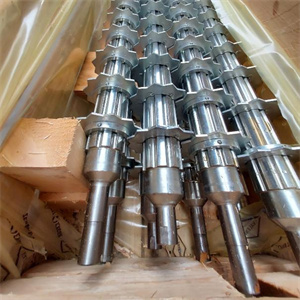
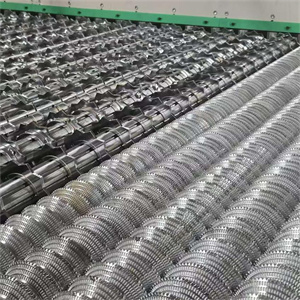
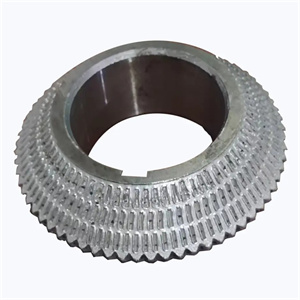
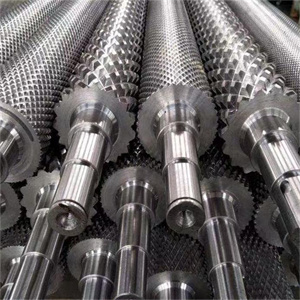
Diamond Roller: Helps guide material movement and supports controlled distribution during mat formation, depending on the forming machine design.
Spreading Roller: Helps spread wood fibers, particles, or strands across the forming conveyor.
Scattering Roller: Helps scatter wood fibers, particles, flakes, or strands during the material distribution stage of mat formation.
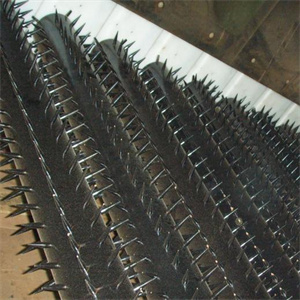
Clean Brush: Removes residual fibers, dust, fine particles, and suitable deposits from rollers and other designated machine surfaces.
Forming Belt: Receives and transports wood material through the forming section to support continuous mat formation.
Pre-Press Belt: Carries the loose mat through the pre-pressing process.
Deaeration Belt: Supports air removal from the mat during pre-pressing.
Continuous Press Chains and Spare Parts for Siempelkamp: Includes standard chains, roller rods, roller pins, and springs for compatible continuous press systems.
Continuous Press Accessories for Dieffenbacher: Includes standard chains, roller rods, roller pins, and chain lock plates for compatible continuous press systems.
Brass Scraper: Used for cleaning applications in continuous press systems.
Roller Nose: A replacement component for the roller nose area of continuous press systems.
Friction Pads: Wear components used in continuous press systems.
These components perform different functions throughout the forming and pressing process, from material distribution and mat transportation to air removal, pre-pressing, and continuous pressing.
Explore more products in the HUATAO Forming and Press Section.
HUATAO supports wood-based panel manufacturers with OEM replacement parts and customized solutions for forming machines and continuous press systems.
can not be empty
The E-mail format is not correct
can not be empty


HUATAO Wood-based Panel Machinery Co., Ltd
ADD : No.298 Zhonghua North Street, Shijiazhuang 050000 China.
TEL : +86 0311 80690567
EMAIL :bella@huataogroup.com
Web: www.woodpanelmachinery.com
 WhatsApp & WeChat : +86 17731169773