
In a drum chipper, the Teeth Plate is responsible for gripping and stabilizing the wood as it enters the cutting zone. Although it does not perform the cutting itself, its condition has a direct impact on chip quality, feeding stability, blade life, and the overall efficiency of the wood chipping process.
Because Teeth Plates are exposed to continuous friction, impact, and heavy loads, they are among the most frequently replaced wear parts in wood processing equipment.
Understanding why Teeth Plates fail—and how to maintain them properly—can help manufacturers reduce downtime, lower maintenance costs, and extend the service life of the entire chipping system.
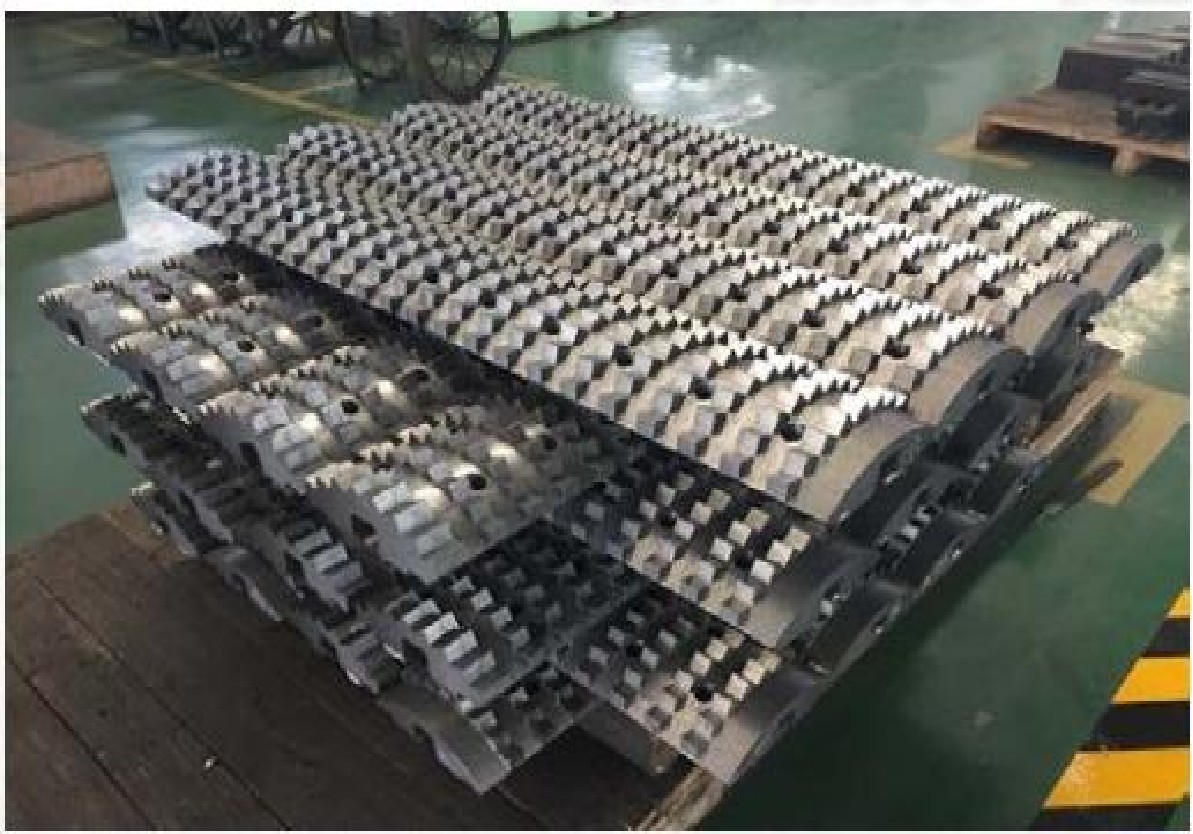
The most common cause of Teeth Plate failure is normal abrasive wear.
As logs, branches, and wood residues continuously pass through the chipper, the serrated teeth gradually become rounded. Once the tooth profile loses its sharp gripping edges, the material begins to slip instead of feeding smoothly into the cutting zone.
Typical signs include:
Routine inspection allows worn Teeth Plates to be replaced before they begin affecting production quality.
Wood is not always clean.
Metal fragments, stones, nails, or other hard contaminants hidden inside logs can strike the Teeth Plate during operation. Repeated impacts may cause cracks, broken teeth, or localized deformation.
To reduce impact damage:
Preventing foreign objects from entering the chipper helps protect both the Teeth Plate and the Chipper Blades.
Even a premium Teeth Plate can wear prematurely if the clearance between the chipper blades and the Teeth Plate is not adjusted correctly.
Excessive clearance reduces cutting efficiency, while insufficient clearance increases friction and accelerates wear on both components.
Manufacturers should regularly check blade alignment and clearance according to the equipment manufacturer's recommendations.
Proper adjustment improves chip consistency and extends the service life of all cutting components.
Not all replacement Teeth Plates are manufactured to the same standard.
Products made from low-grade steel or with poor heat treatment often experience rapid wear, surface cracking, or tooth deformation under heavy-duty operation.
When selecting replacement parts, consider:
High-quality components typically deliver longer service life and more stable production performance.
Many production lines continue operating until the Teeth Plate is severely worn.
By this stage, the damage has often spread to other components, including:
Regular inspections make it possible to identify wear before it causes secondary equipment damage.
Preventive maintenance is almost always less expensive than emergency repairs and unplanned downtime.
To maximize the service life of your Teeth Plates, maintenance engineers should:
A proactive maintenance program helps maintain stable production while reducing long-term operating costs.
HUATAO supplies premium Chipper Teeth Plates for drum chippers used in MDF, HDF, Particle Board, OSB, plywood, biomass, and pulp production lines.
Our Teeth Plates are manufactured from high-strength alloy steel and precision-machined to provide:
Together with Chipper Blades, Chipper Drums, and other wear parts, HUATAO offers complete spare parts solutions to help customers maintain reliable and efficient wood chipping operations.
A worn Teeth Plate may seem like a minor issue, but its impact can extend throughout the entire wood chipping process. From unstable feeding and poor chip quality to increased blade wear and unexpected downtime, neglecting this small component can lead to significant production losses.
By understanding the common causes of Teeth Plate failure and implementing a proactive maintenance strategy, manufacturers can improve equipment reliability, extend component life, and achieve more consistent production performance.
Website: www.woodpanelmachinery.com
Email: bella@huataogroup.com
Whatspp: +8617731169773
#TeethPlate #ChipperTeethPlate #ChipperSpareParts #WoodChipper #WoodProcessing #MDFProduction #ParticleBoard #OSBProduction #PreventiveMaintenance #IndustrialMaintenance #WoodMachinery #WearParts #ProductionEfficiency #Biomass #PulpAndPaper #FactoryMaintenance #WoodPanelIndustry #Engineering #HUATAO #WoodBasedPanel
can not be empty
can not be empty

HUATAO Wood-based Panel Machinery Co., Ltd
ADD : No.298 Zhonghua North Street, Shijiazhuang 050000 China.
TEL : +86 0311 80690567
EMAIL :bella@huataogroup.com
Web: www.woodpanelmachinery.com
 WhatsApp & WeChat : +86 17731169773