
In wood-based panel manufacturing, cutting blades are one of the most important and frequently replaced wear parts. Although blades are small components compared with large production equipment, their performance directly affects production efficiency, raw material utilization, energy consumption, and final product quality.
For MDF, Particle Board, OSB, and Plywood production lines, cutting tools such as chipper knives, flaker knives, and rotary cutting knives are responsible for accurately processing wood materials into chips, flakes, and veneers required for the following production processes.
A high-performance blade ensures stable operation, while a poor-quality or worn blade can quickly reduce production efficiency and increase operating costs.
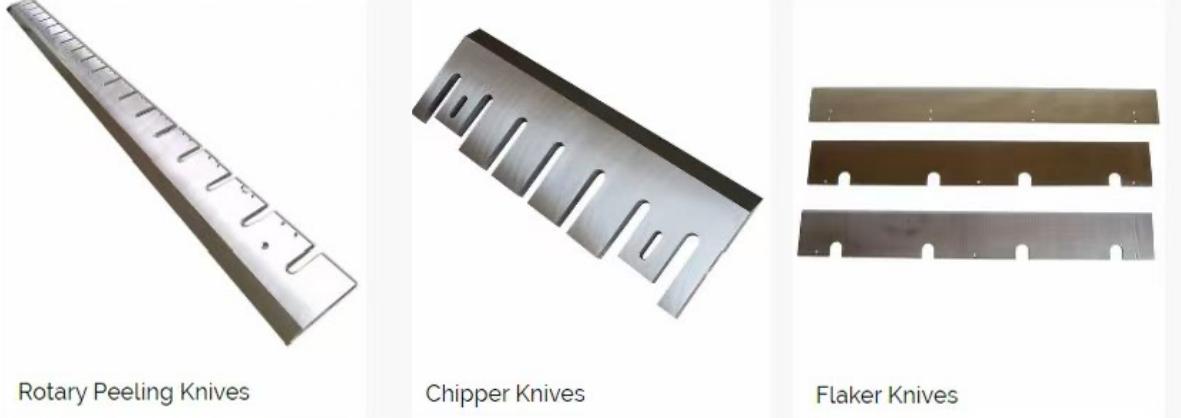
The first step in wood-based panel production is the preparation of raw materials.
Different machines require different cutting tools:
The cutting accuracy of these blades determines:
A sharp and durable blade helps create stable raw materials, which improves the performance of the entire production line.
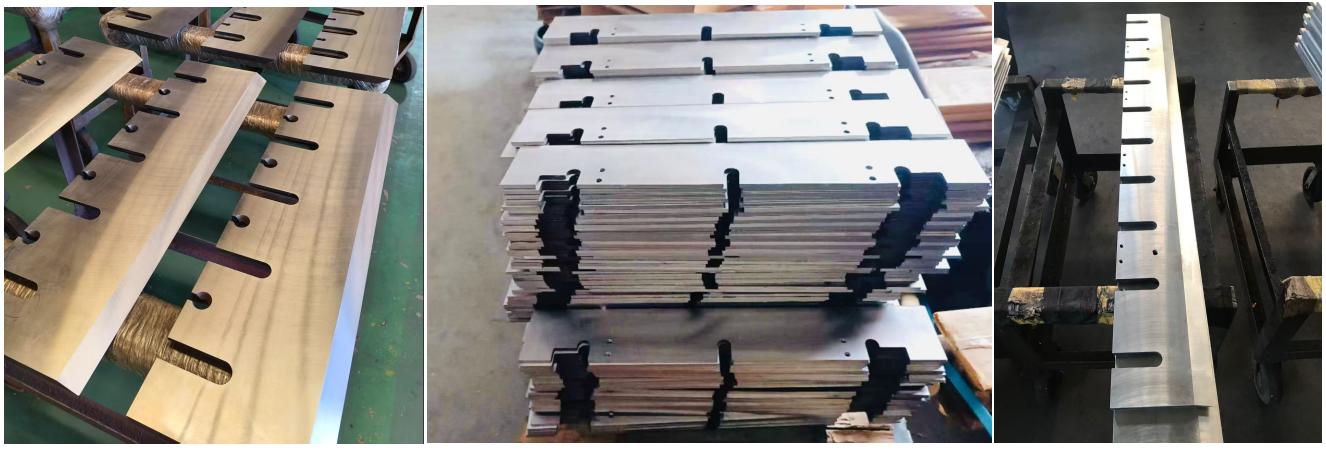
Modern wood-based panel factories often operate continuously for long periods. During production, blades experience:
When blades maintain excellent sharpness and wear resistance, they can:
However, worn blades may lead to:
Therefore, choosing reliable cutting blades is essential for maintaining continuous production.
Blade replacement is one of the regular maintenance tasks in wood processing equipment.
Poor-quality blades often require:
Premium cutting blades provide:
Advanced alloy materials and professional heat treatment improve hardness and wear resistance.
Precision manufacturing ensures accurate blade dimensions and consistent cutting results.
Long-lasting blades allow production lines to run longer with fewer interruptions.
For large-scale wood panel manufacturers, improving blade life can significantly reduce annual operating costs.
The quality of raw materials determines the quality of finished panels.
For example:
In MDF production:
In Particle Board and OSB production:
In Plywood production:
A high-quality cutting blade helps maintain stable raw material dimensions, providing a strong foundation for the entire manufacturing process.
The service life and performance of cutting blades depend on several factors:
High-strength alloy steel provides better:
Accurate machining ensures:
Proper heat treatment improves blade hardness while maintaining toughness.
Regular inspection, grinding, and proper installation can significantly extend blade lifespan.
Selected alloy materials provide excellent durability under demanding working conditions.
Strict production control ensures accurate dimensions and stable performance.
Suitable for various international brands of wood processing equipment.
Longer service life helps customers reduce downtime and maintenance costs.
Cutting blades are the heart of wood processing equipment. Their performance directly influences production efficiency, product quality, and operating costs.
In wood-based panel manufacturing, investing in high-quality blades is not only about replacing a spare part — it is about improving the reliability and profitability of the entire production line.
HUATAO provides professional cutting blade solutions to help MDF, PB, OSB, and plywood manufacturers achieve stable, efficient, and continuous production.
HUATAO Wood-Based Panel Machinery
Website: www.woodpanelmachinery.com
Email: bella@huataogroup.com
Whatsapp: +8617731169773
#CuttingBlades #ChipperKnife #FlakerKnife #RotaryCuttingKnife #WoodBasedPanelMachinery #WoodProcessingMachinery #MDFProductionLine #ParticleBoardProduction #OSBProductionLine #PlywoodMachinery #MachinerySpareParts #WearParts #WoodMachineryParts #IndustrialCuttingTools #HUATAO
can not be empty
can not be empty

HUATAO Wood-based Panel Machinery Co., Ltd
ADD : No.298 Zhonghua North Street, Shijiazhuang 050000 China.
TEL : +86 0311 80690567
EMAIL :bella@huataogroup.com
Web: www.woodpanelmachinery.com
 WhatsApp & WeChat : +86 17731169773